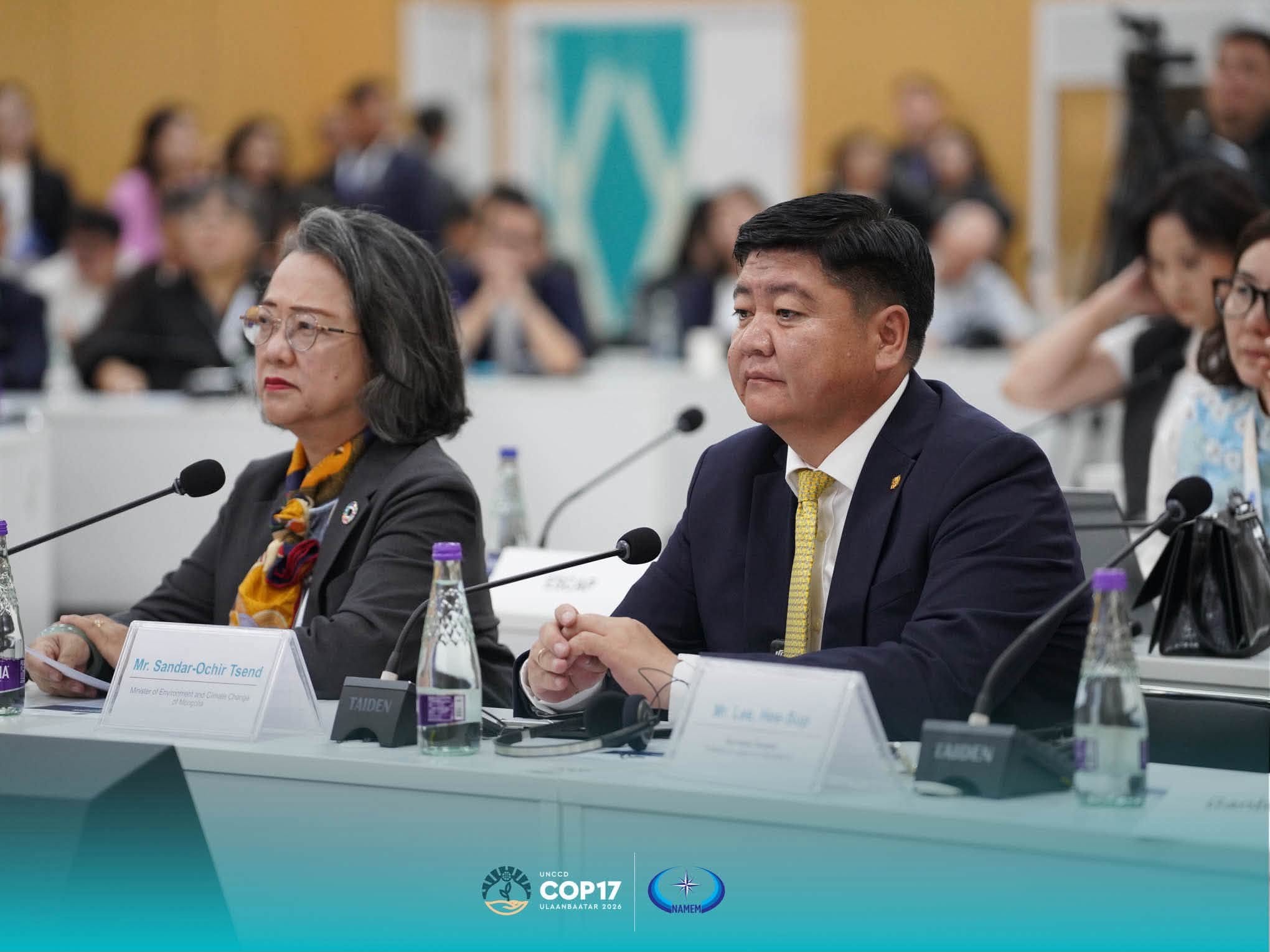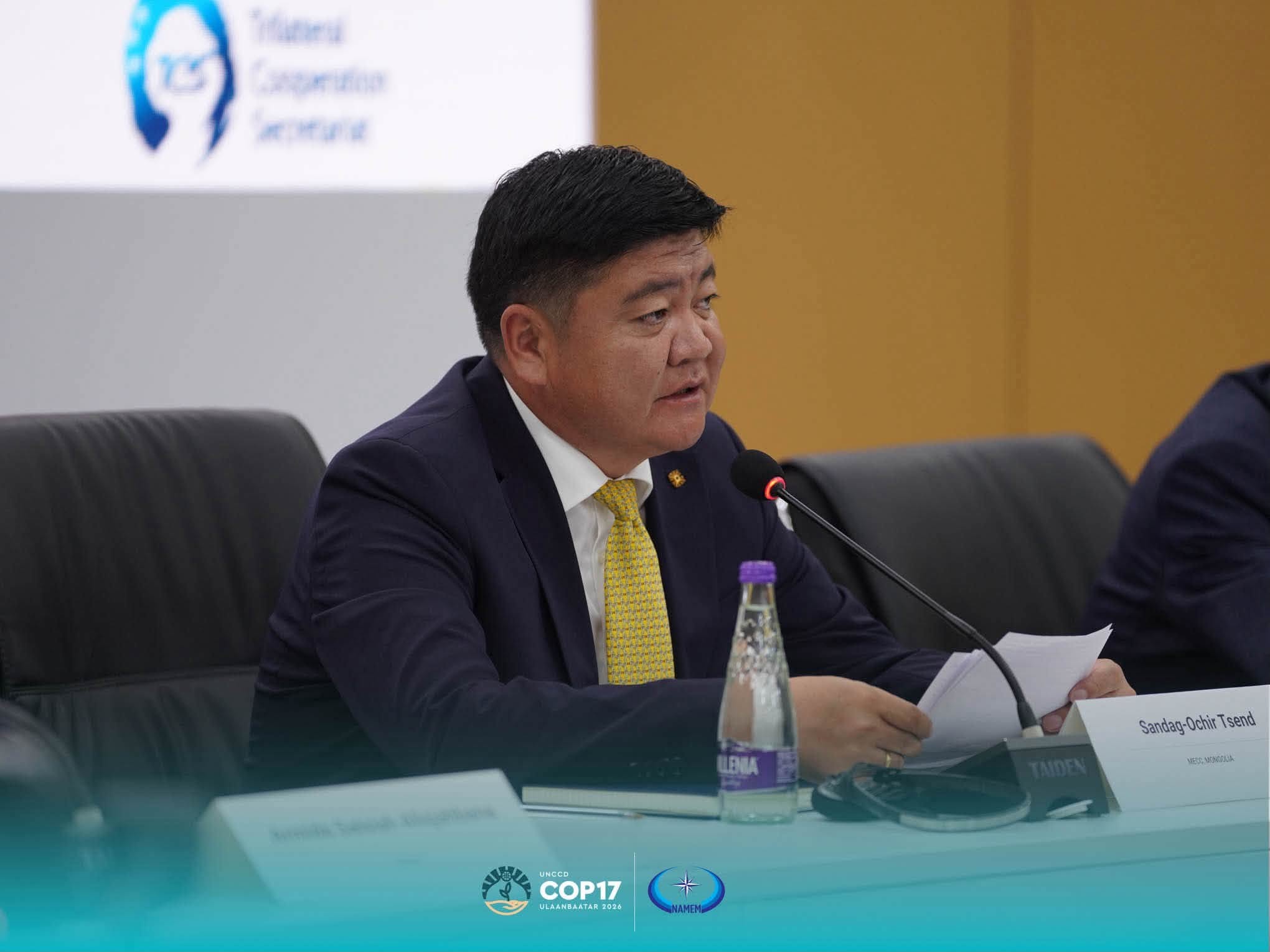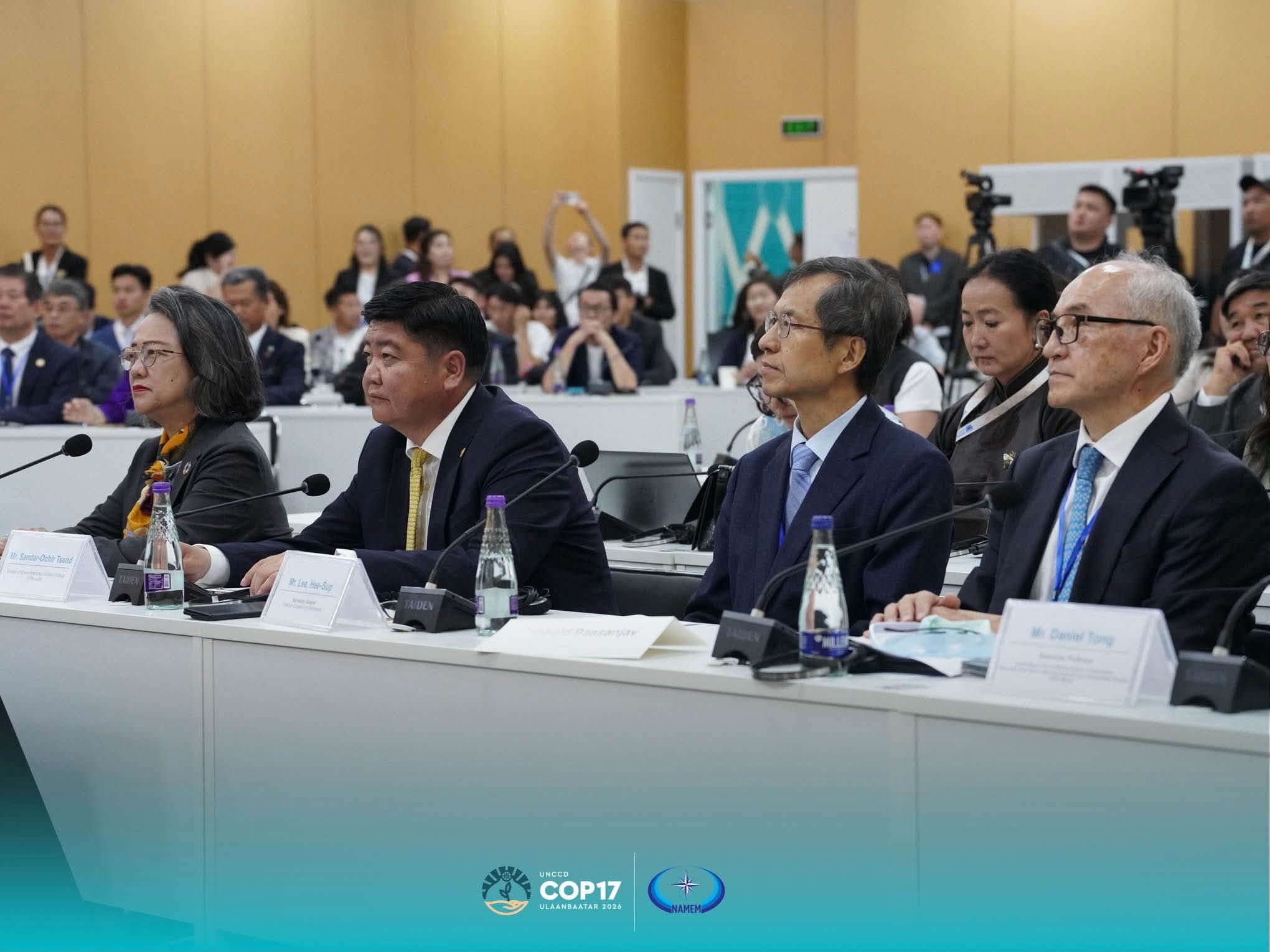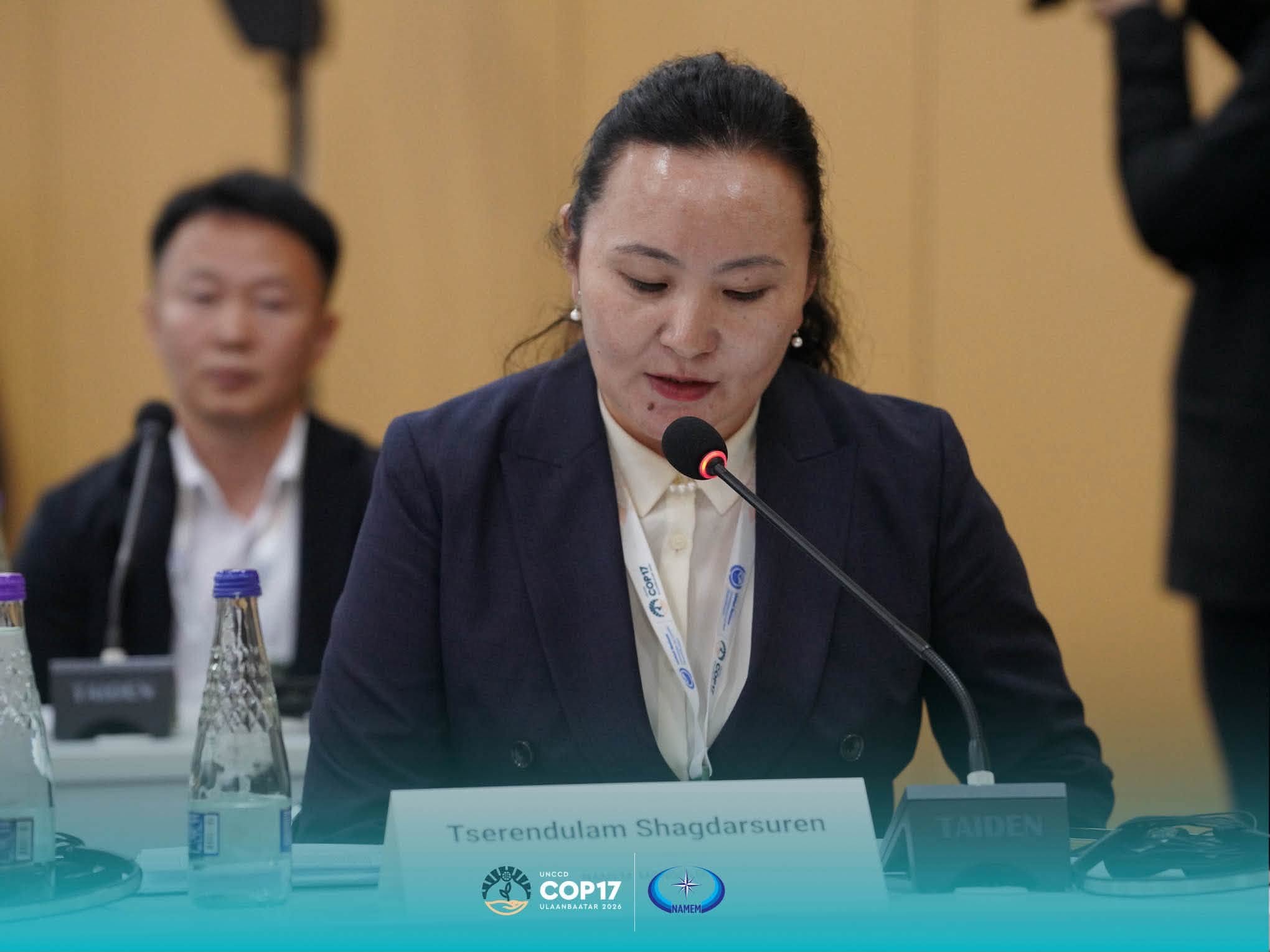

COP17: MONGOLIA, THE UN ECONOMIC AND SOCIAL COMMISSION FOR ASIA AND THE PACIFIC, AND THE TRILATERAL COOPERATION SECRETARIAT LAUNCH A JOINT INITIATIVE TO COMBAT TRANSBOUNDARY SAND AND DUST STORMS IN NORTHEAST ASIA
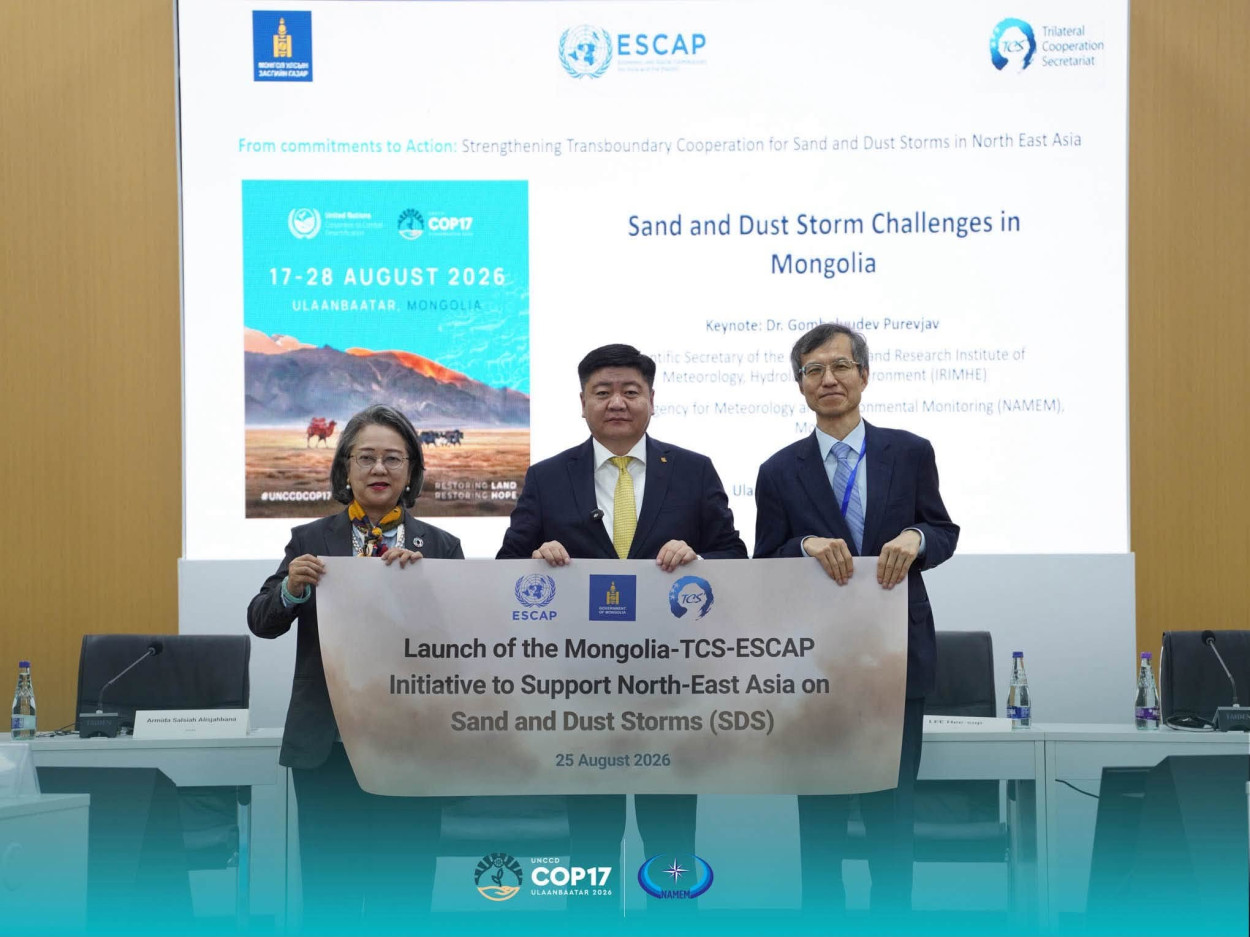
During the 17th Session of the Conference of the Parties (COP17), the Government of Mongolia, the United Nations Economic and Social Commission for Asia and the Pacific (ESCAP), and the Trilateral Cooperation Secretariat (TCS) of China, Japan, and the Republic of Korea officially launched a historically significant regional cooperation initiative. This cooperation takes the form of the Mongolia–TCS–ESCAP Joint Initiative on Combating Sand and Dust Storms in Northeast Asia, to be implemented during 2026–2034. With seed funding and support from the TCS, comprehensive measures will be implemented to reduce the environmental, social, economic, and public health risks posed by transboundary sand and dust storms in the region.Driven by the increasing intensity of desertification, unsustainable land use, and the impacts of climate change, sand and dust storms are becoming an increasingly complex hazard and risk in Northeast Asia. Originating in arid and desert regions, sand and dust storms can travel hundreds of kilometres through the atmosphere, degrading air quality far beyond their source areas, disrupting critical infrastructure, and posing significant risks to public health. As such, they represent a transboundary challenge that cannot be effectively addressed by any single country alone.
The initiative positions Mongolia as a key partner under the “Trilateral Cooperation + X” mechanism, endorsed at the Trilateral Summit Meeting of the leaders of China, Japan, and the Republic of Korea in May 2024, and establishes a strategic platform for strengthening regional resilience.
Implemented in close coordination with the United Nations and other non-UN partners, the initiative comprises the following four strategic pillars:
-
Impact-based integrated forecasting and early warning systems;
-
Risk assessment, research, and impact analysis;
-
Community-level preparedness; and
-
A regional coordination and knowledge-sharing platform, high-level engagement, and cooperation.
The initial phase of activities will place particular emphasis on impact-based integrated forecasting and early warning systems, supporting a shift from simply detecting hazards to providing impact-based information that can inform policy and decision-making. Furthermore, by improving Standard Operating Procedures (SOPs), strengthening the architecture of risk information and warning systems, and enhancing the capacity of Mongolia’s National Meteorological Service, the partnership will establish an “early protection” mechanism to safeguard people both in source regions and in countries located downstream of atmospheric flows through which sand and dust storms are transported and observed.