
COP17: DISCUSSION HELD ON THE DEVELOPMENT, SCIENCE, AND TECHNOLOGICAL INNOVATIONS IN WEATHER MODIFICATION ACTIVITY
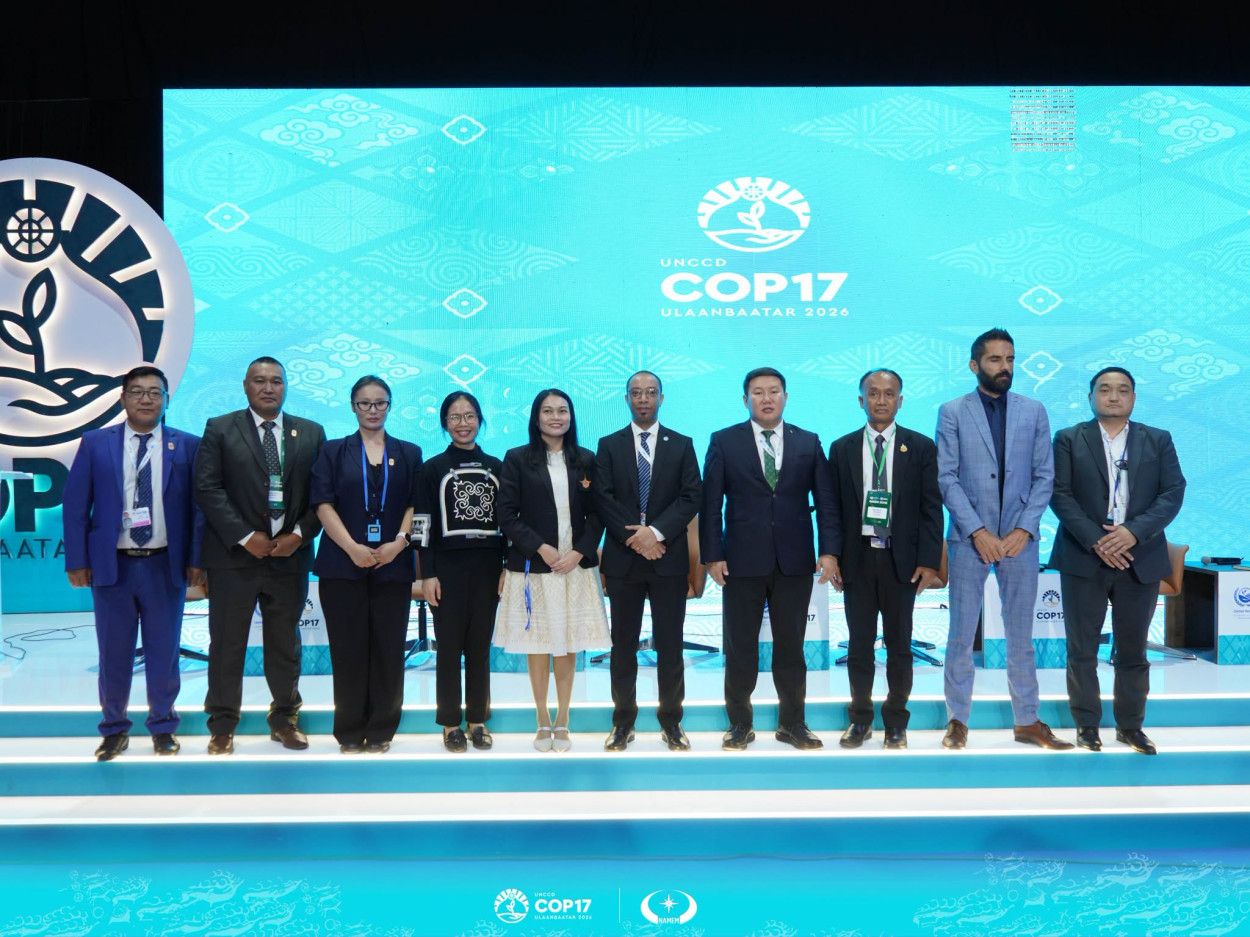
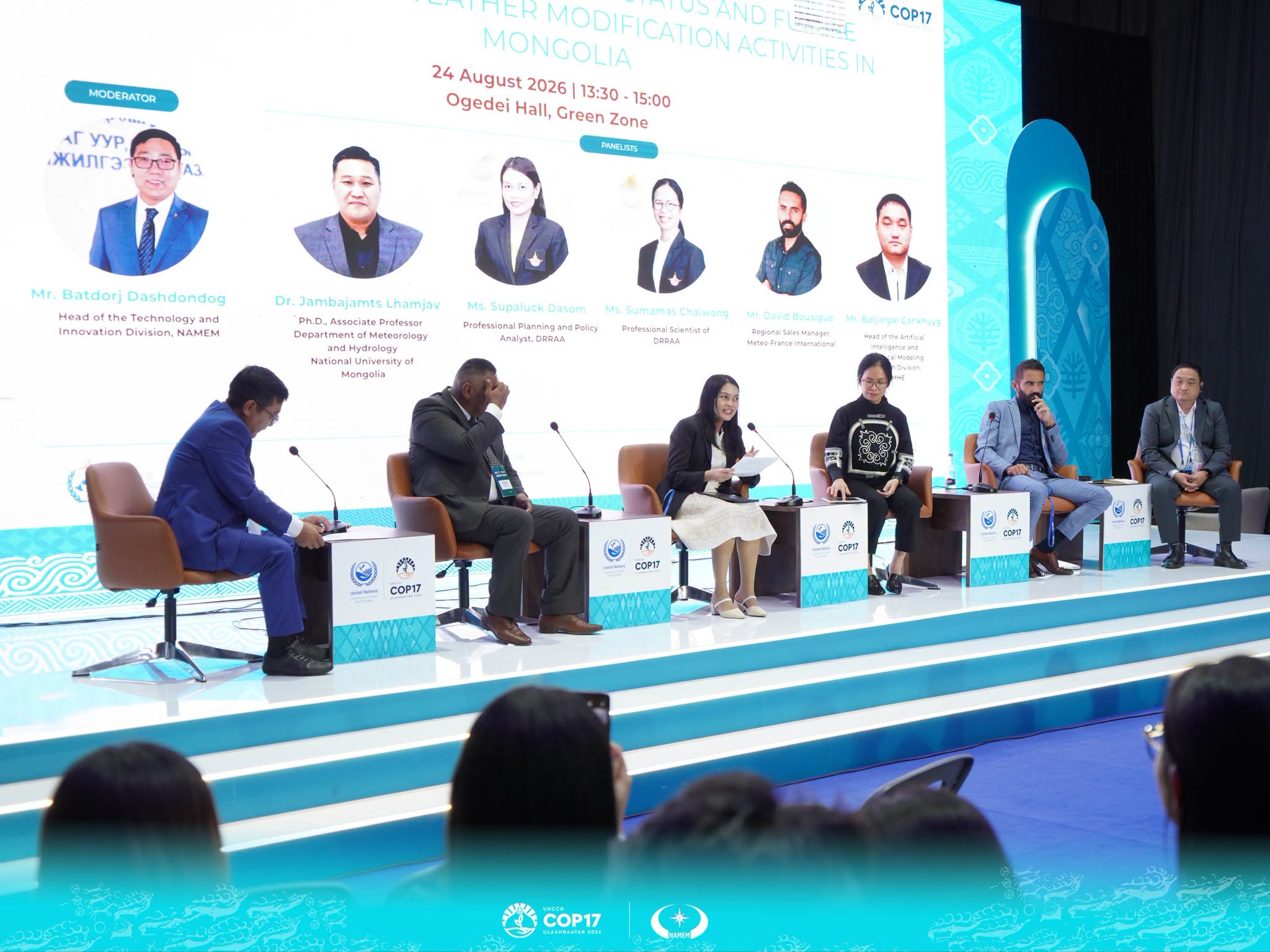
The discussion on the development, scientific advancements, and technological innovations in weather modification activities was organized today by the National Agency for Meteorology and Environmental Monitoring (NAMEM) at the “Ögedei” Hall in the Green Zone.
Representatives from the World Meteorological Organization (WMO), the Royal Rainmaking and Agricultural Aviation Department of Thailand, Météo-France, the National University of Mongolia (NUM), and other scientific and research institutions participated in the discussion.
In his opening remarks, Mr. E. Battulga, Director of the National Agency for Meteorology and Environmental Monitoring (NAMEM), emphasized the importance of developing a weather modification system that is science-based, delivers measurable results, utilizes modern technologies, and ensures environmental and human health safety. He also highlighted the need to integrate weather modification activities with early warning systems, weather forecasting, drought risk assessment, and water management.
Today’s discussion covered a wide range of issues related to weather modification activities, including their scientific basis, technological advancements, impact assessment, legal and policy frameworks, financing, human resource capacity, and international cooperation. The discussion was significant in identifying opportunities to develop weather modification activities in Mongolia in a science- and technology-based, effective, and sustainable manner, while also helping to define future directions for policy, planning, and international cooperation.
Participants emphasized that weather modification activities should be based on sound scientific principles, reliable observations, research, and rigorous impact assessments. They also highlighted that the adoption of artificial intelligence, numerical modeling, weather radar, satellite technology, and modern observation systems presents an important opportunity to improve the effectiveness and outcomes of weather modification activities.
Furthermore, participants agreed on the need for Mongolia to combine its accumulated experience and knowledge with international scientific advances and technological developments, while expanding regional cooperation and strengthening the exchange of knowledge, expertise, and technologies.