
COP17: PUBLIC SESSION OF THE WORKING GROUPS ON SAND AND DUST STORMS HELD UNDER THE TRIPARTITE ENVIRONMENT MINISTERS MEETING OF CHINA, JAPAN, AND THE REPUBLIC OF KOREA
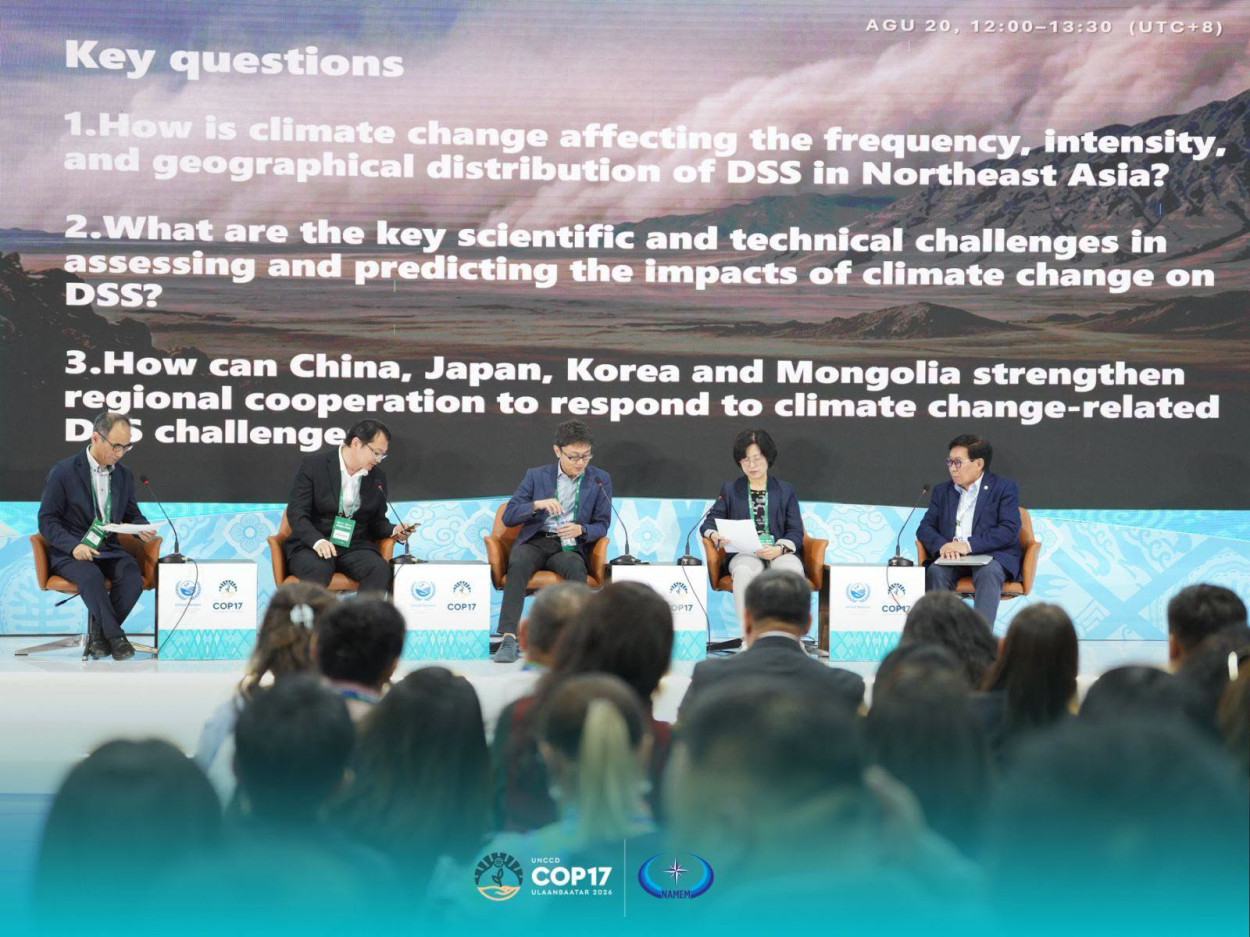
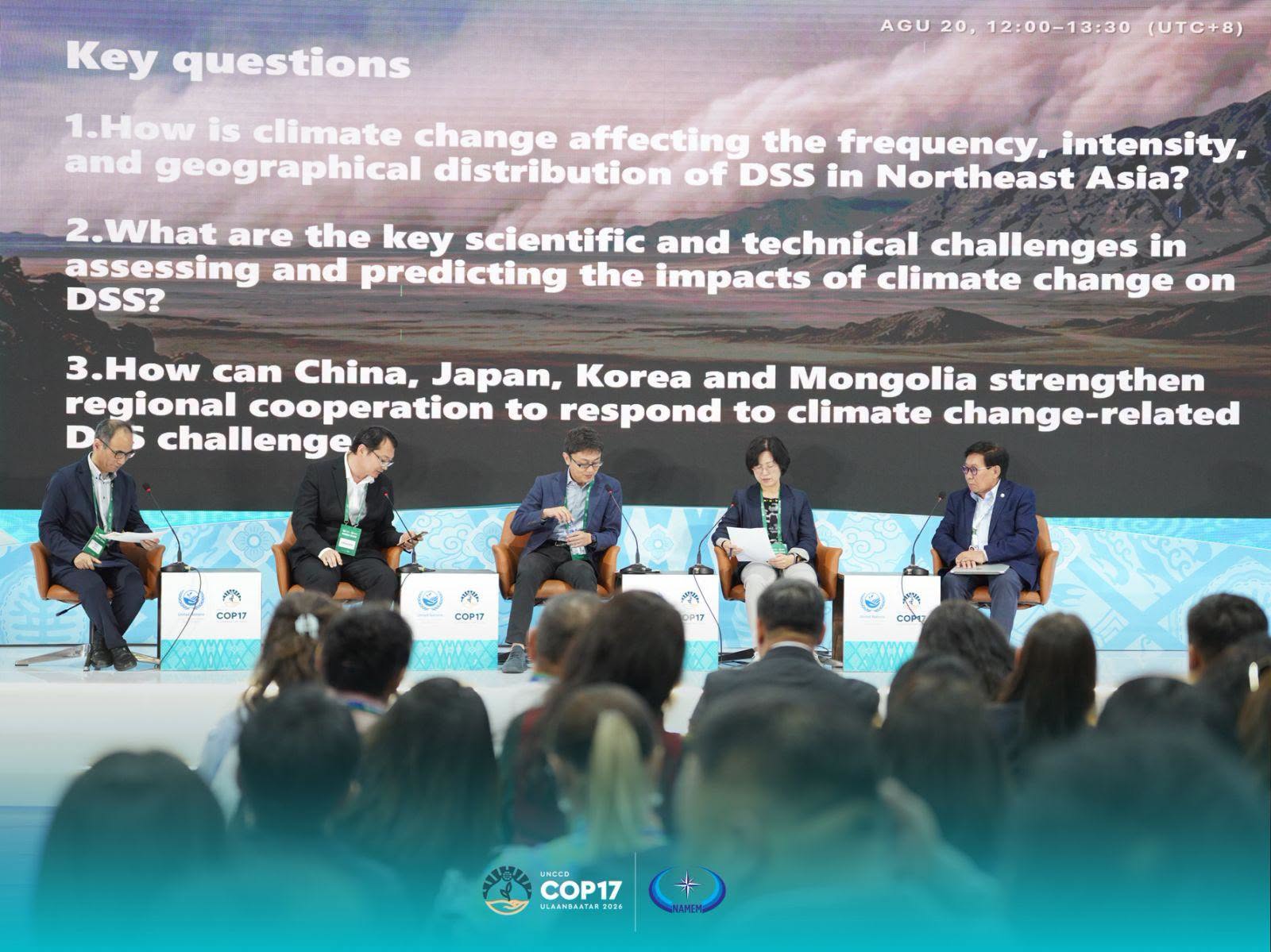
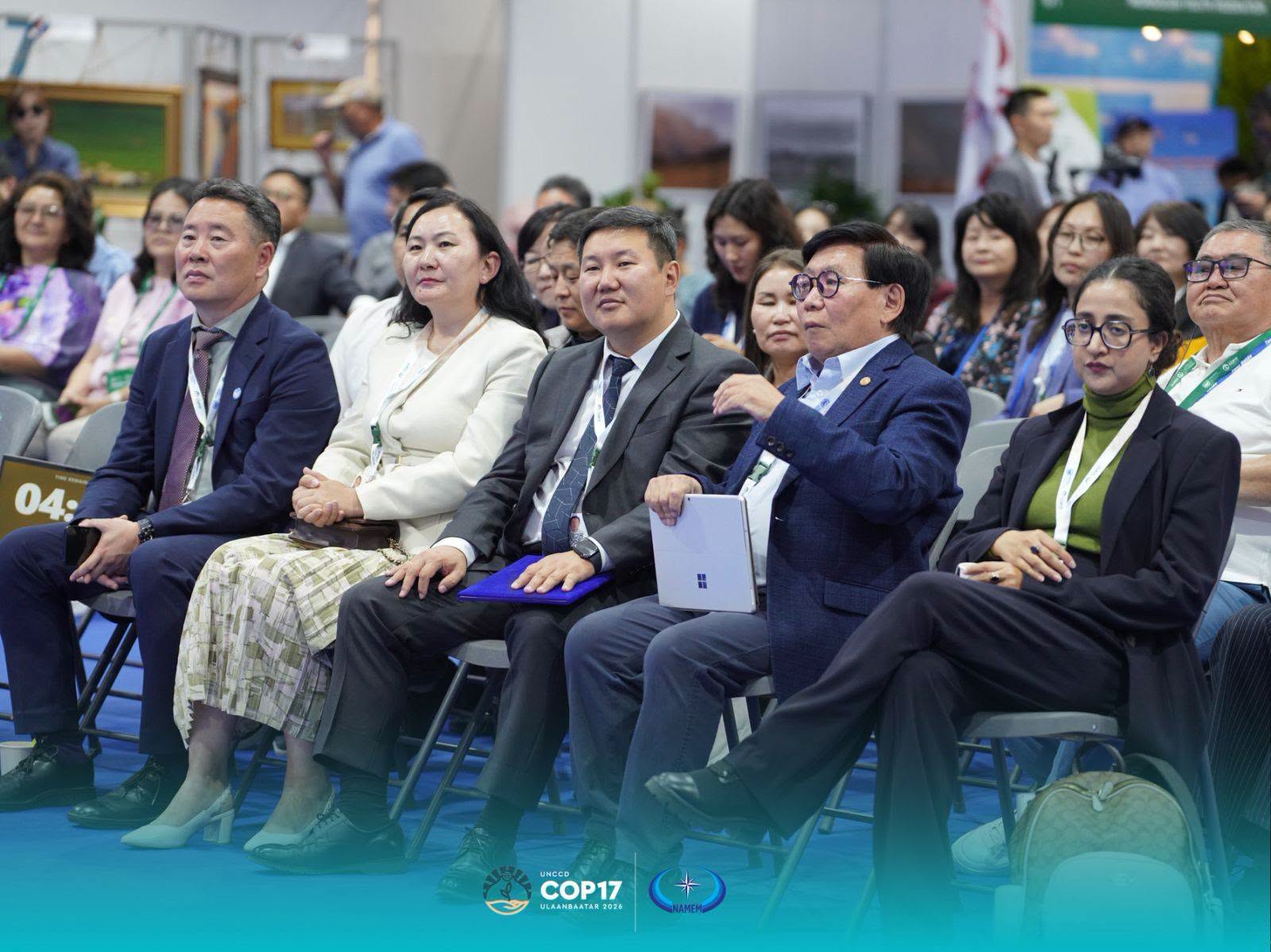
Within the framework of the 17th Session of the Conference of the Parties to the United Nations Convention to Combat Desertification (UNCCD COP17), the Public Session of the Working Groups I and II on Sand and Dust Storms (SDS) under the Tripartite Environment Ministers Meeting (TEMM) of China, the Republic of Korea, and Japan was successfully held today at the Tsagaadai Hall of the Green Zone.
The Tripartite Environment Ministers Meeting (TEMM), established in 1999, is an effective mechanism that has made an important contribution to strengthening environmental cooperation among countries in Northeast Asia and addressing common regional environmental challenges through joint efforts.
The TEMM Working Groups I and II on Sand and Dust Storms, established under the framework of TEMM, have been actively cooperating since 2008 in the areas of sand and dust storm monitoring, joint research, development of forecasting systems, and scientific information exchange.
Mongolia has regularly participated in this cooperation as an observer country, contributing to the expansion of regional cooperation and the exchange of scientific knowledge and expertise.
The Public Session addressed a range of issues, including the interrelationship between climate change and sand and dust storms, assessment of their impacts, scientific and technological challenges in forecasting, and opportunities to strengthen regional cooperation.
The event was particularly significant as it was held for the first time in Mongolia, one of the major source regions of sand and dust storms, and in particular, within the framework of UNCCD COP17.
The session also provided an important opportunity to present to the public the achievements of many years of cooperation among the TEMM Working Groups on Sand and Dust Storms, including progress in scientific research, monitoring, and forecasting, while raising public awareness of the importance of regional cooperation and information exchange in reducing the transboundary impacts of sand and dust storms.
Going forward, as the risks associated with sand and dust storms are expected to increase under the influence of climate change, strengthening joint research, monitoring, information exchange, and forecasting systems will be of critical importance in addressing common challenges across the Northeast Asian region.